
Germany E-Invoicing Mandate 2027: What Does the €800,000 Revenue Threshold Mean?
Learn who must issue e-invoices in Germany from 2027, how the €800,000 revenue threshold works, and what XRechnung, ZUGFeRD and Peppol mean.
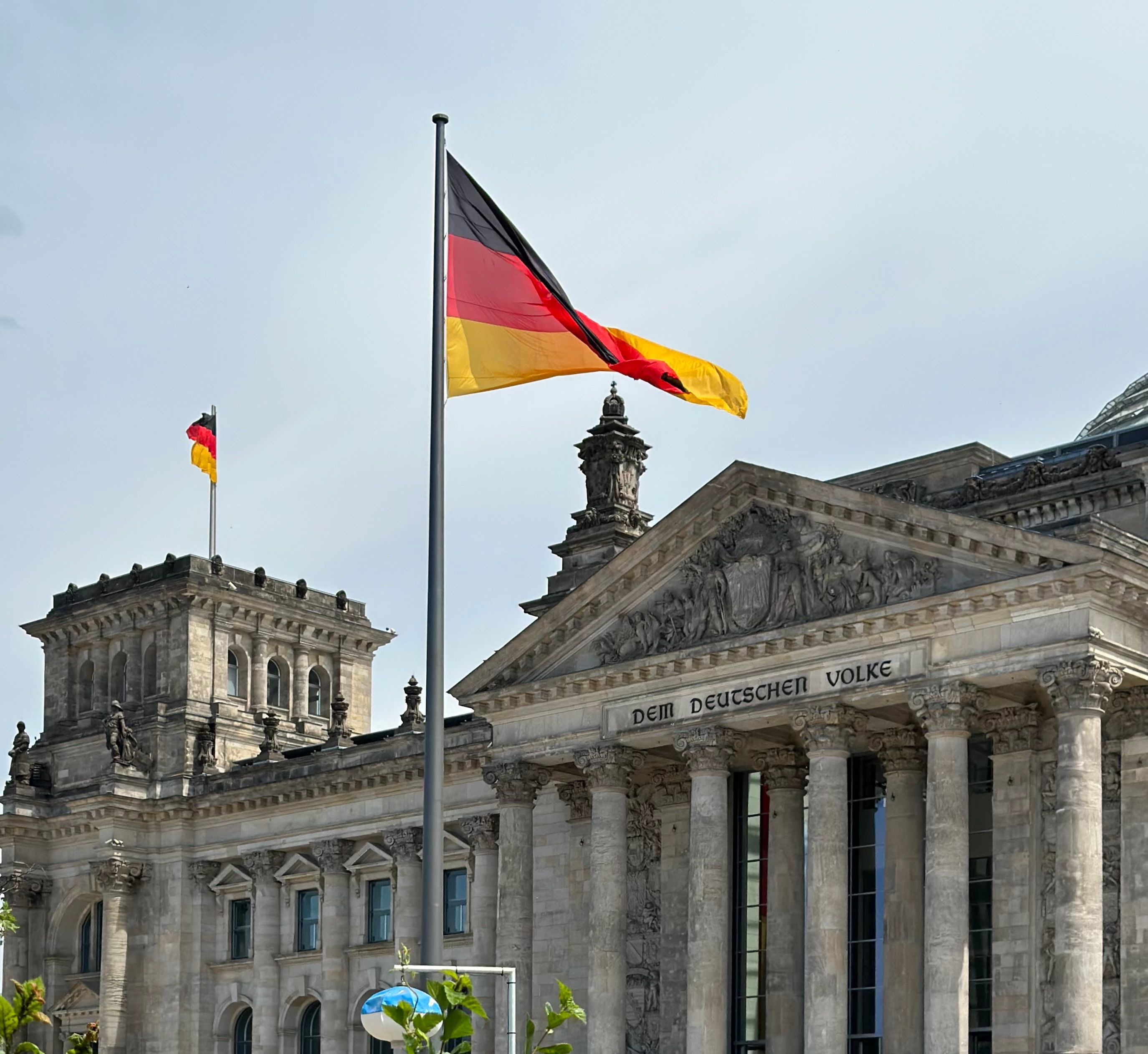
One of the most important stages of Germany’s B2B e-invoicing transition begins on January 1, 2027.
Since 2025, businesses in Germany have been required to have the technical capability to receive e-invoices. In 2027, the obligation goes one step further: businesses with total revenue above €800,000 in 2026 will be required to issue structured e-invoices for certain domestic B2B transactions.
Businesses that do not exceed this threshold can continue to benefit from the transitional rules until December 31, 2027. From January 1, 2028, the general transition period largely ends and the e-invoicing obligation expands regardless of revenue.
So how exactly does the €800,000 threshold work? Which invoices fall within scope? Can PDF invoices still be used? And where do XRechnung, ZUGFeRD and Peppol fit into the German model?
This guide explains Germany’s 2027 e-invoicing requirements step by step.
Why Is 2027 Important for E-Invoicing in Germany?
Germany is introducing B2B e-invoicing through a phased transition rather than switching all businesses at once.
The process can be divided into three main stages:
Date | What Changes? |
|---|---|
January 1, 2025 | Businesses in Germany must be able to receive e-invoices |
January 1, 2027 | Businesses with total 2026 revenue above €800,000 must begin issuing e-invoices |
January 1, 2028 | The general transition period ends and the issuing obligation expands more broadly |
During 2025 and 2026, businesses can continue to use paper invoices or other electronic formats such as PDF under the transitional rules, provided the relevant conditions are met.
From 2027, the company’s revenue in the previous year becomes a key factor.
What Is the E-Invoicing Revenue Threshold for 2027?
The critical threshold for Germany’s 2027 transition is €800,000.
However, there is an important distinction.
If a company’s total revenue in 2026 is:
Above €800,000: The obligation to issue e-invoices for relevant domestic B2B transactions begins on January 1, 2027.
€800,000 or below: The business can continue to use the transitional rules until the end of 2027.
From January 1, 2028: The revenue-based transition relief ends.
This means the threshold should not be interpreted as “€800,000 or more.”
A business with exactly €800,000 in revenue can still benefit from the 2027 transition period.
Which Year’s Revenue Is Used for the €800,000 Threshold?
For the 2027 obligation, the relevant figure is the business’s total revenue in the 2026 calendar year.
The key term here is “total revenue.”
For example, suppose a company generated:
€550,000 from domestic B2B sales in Germany
€400,000 from other business activities
Its total revenue would be €950,000.
Because this exceeds the €800,000 threshold, the company would fall within the 2027 e-invoicing obligation if the other applicable conditions are also met.
Businesses therefore need to consider the legally defined Gesamtumsatz, or total revenue, rather than looking only at specific customer sales in Germany.
Which Transactions Fall Within Scope in 2027?
Germany’s e-invoicing rules primarily focus on domestic transactions between businesses.
The general scenario is:
Business established in Germany → Business established in Germany
The establishment status of both parties, the nature of the transaction and the invoicing obligation all matter when determining scope.
Foreign companies with a branch or fixed establishment in Germany that participates in the transaction should also assess their position separately.
Having a German VAT registration alone does not automatically mean that a foreign business is considered established in Germany for every transaction.
Can Businesses Still Send PDF Invoices in 2027?
The answer depends on the company’s revenue.
If 2026 revenue exceeds €800,000
The transition period ends at the end of 2026. For relevant transactions, the business must use a structured electronic invoice that meets the legal definition of an e-invoice from 2027.
If 2026 revenue is €800,000 or below
The business can continue to use other invoice types until December 31, 2027 under the transitional rules.
For electronic but unstructured formats, such as a simple PDF invoice, the recipient’s consent is required.
The distinction between an “electronic invoice” and a “digitally sent invoice” is important.
Since January 1, 2025, a simple PDF file does not qualify as an E-Rechnung under the German definition. An e-invoice must contain structured data that can be processed electronically.
Which E-Invoice Formats Can Be Used in Germany?
Germany does not require one single invoice format. Instead, the framework is based on structured formats that meet specific technical requirements.
Three of the most common formats are:
XRechnung
XRechnung is a fully structured e-invoice format widely used in Germany.
Invoice data is provided in XML and can be processed automatically by software systems.
It has also been one of the main formats used in German public-sector e-invoicing for several years.
ZUGFeRD
ZUGFeRD is a hybrid format that combines structured XML data with a human-readable PDF/A-3 document.
This allows the same file to be viewed by a person and, when an appropriate profile is used, processed as structured data by software systems.
Peppol BIS
Peppol BIS Billing 3.0 is an implementation specification based on EN 16931 and used for exchanging invoices over the Peppol network.
Peppol is particularly relevant for companies operating across multiple countries and looking to exchange business documents with customers through a common interoperability network.
However, one point is important:
Germany’s B2B e-invoicing mandate does not require all businesses to use Peppol.
Peppol is one of the infrastructures that can be used to transmit structured invoices. The chosen format and transmission method must meet the technical requirements of German legislation.
Is Peppol Mandatory in Germany?
No. Unlike Belgium, Germany does not require all B2B invoices to be transmitted through Peppol.
However, Peppol becomes particularly relevant in scenarios such as:
Companies operating in several European countries
Businesses working with customers in markets where Peppol is already widely used
Companies that want to reach different recipients through a common network
Businesses that want to transmit structured invoices such as XRechnung through Peppol
Organizations that want to manage different country requirements within a more standardized infrastructure
For example, Belgium uses Peppol as a central infrastructure for B2B e-invoicing, while Germany applies a more flexible transmission model.
For internationally active companies, the question should therefore not only be:
“Which format should we use in Germany?”
A broader question is:
“To what extent can the same infrastructure support our e-invoicing requirements in Germany, Belgium and other markets where we operate?”
Which Transactions Are Exempt from Germany’s E-Invoicing Obligation?
German rules include certain exceptions to the structured e-invoicing requirement.
These can include:
Small-value invoices up to €250 gross
Transport tickets that qualify as invoices
Certain VAT-exempt transactions
B2C transactions
Invoices for certain supplies or services provided by Kleinunternehmer
In addition, Germany’s mandatory B2B e-invoicing framework primarily applies to domestic transactions, so cross-border transactions are not assessed under the same rules.
For cross-border B2B transactions within the EU, the ViDA framework will become increasingly important in the coming years.
Do Small Businesses Have to Issue E-Invoices in 2027?
Two different “small business” concepts need to be separated.
The first is the €800,000 transition threshold.
Businesses with total 2026 revenue of €800,000 or less can generally continue to benefit from the transition period until the end of 2027.
The second is Germany’s Kleinunternehmer status.
Invoices issued for supplies and services covered by the Kleinunternehmer rules are subject to a separate exemption from the e-invoice issuing obligation.
This means company size alone is not enough to determine whether a business falls within scope. Tax status, transaction type and annual revenue must be assessed together.
Do Businesses Need to Wait Until 2027 to Receive E-Invoices?
No.
The change on the receiving side already started on January 1, 2025.
Businesses in Germany must be able to receive structured e-invoices. The legislation does not require one specific service provider or a Peppol connection for this purpose.
Operationally, however, businesses need to be able to:
view incoming structured invoices
process them technically
transfer invoice data into accounting or ERP processes
retain the documents in line with applicable requirements
For this reason, planning only for outgoing invoices would leave part of the process uncovered.
What Should Businesses Check Before 2027?
For businesses likely to fall within scope, 2026 should be treated as a preparation period.
The following areas deserve particular attention.
1. Monitor Your 2026 Total Revenue
Do not wait until the end of the year to determine whether the €800,000 threshold will be exceeded.
If your business is likely to exceed the threshold, your e-invoicing infrastructure should be ready before January 1, 2027.
2. Identify the Invoice Formats You Need
Do your customers use XRechnung? Do they accept ZUGFeRD? Do they exchange documents through Peppol?
Format requirements should be assessed by customer and transaction.
3. Plan Incoming and Outgoing Invoices Together
Generating an invoice is only one part of the process.
Sending, receiving, validating, tracking document status and transferring data into ERP systems should be planned as one end-to-end flow.
4. Review Your Multi-Country Setup
If your company operates not only in Germany but also in Belgium, France, Poland, the UAE or other markets introducing e-invoicing mandates, managing a separate connection for every country can become difficult over time.
This is where interoperability infrastructures such as Peppol become more relevant.
5. Do Not Leave Testing Until the Deadline
Structured e-invoicing requires testing of invoice formats, company identifiers, customer data and system integrations.
Sending the first invoice on the day the mandate takes effect can turn technical issues directly into operational problems.
How Does JetPeppol Support E-Invoicing in Germany?
JetPeppol is a Peppol Access Point and e-invoicing platform that supports businesses in sending and receiving structured electronic invoices over the Peppol network.
The platform supports XRechnung using UBL syntax as well as Peppol formats such as Peppol BIS Billing 3.0.
With JetPeppol, businesses can:
send and receive Peppol invoices
support XRechnung documents
view incoming documents in one place
track the status of outgoing documents
receive incoming invoices in a structure ready for ERP transfer
manage Peppol processes across different markets through a common infrastructure
This can be particularly useful for companies operating in Germany as well as other European markets that already use Peppol, helping reduce the need to manage completely separate infrastructures for each country.
Frequently Asked Questions
What is the e-invoicing revenue threshold in Germany for 2027?
The transition threshold for 2027 is €800,000. Businesses with total 2026 revenue above €800,000 must issue e-invoices for relevant domestic B2B transactions from January 1, 2027, provided the other applicable conditions are met.
Does a company with exactly €800,000 in revenue have to issue e-invoices in 2027?
Under the general transition rule, no. Businesses with total revenue of €800,000 or less in the previous year can continue to benefit from the transition period until December 31, 2027.
Which year’s revenue is used for the 2027 threshold?
The relevant figure is the business’s total revenue in 2026.
Does a PDF invoice count as an e-invoice in Germany?
No. Since January 1, 2025, a simple PDF does not meet the German definition of a structured e-invoice. PDFs can still be used under certain transitional conditions.
Is Peppol mandatory in Germany?
No. Peppol is not the only mandatory transmission network for B2B e-invoicing in Germany. However, it can be used to exchange structured invoices through a standardized network, especially in multi-country e-invoicing environments.
Is XRechnung mandatory in Germany?
Germany’s B2B e-invoicing rules do not require XRechnung exclusively. Different formats that meet the legal requirements for a structured e-invoice can be used. XRechnung and suitable ZUGFeRD profiles are among the common examples.
When will all businesses have to issue e-invoices?
Under the transition rules, the general revenue-based transition period ends on January 1, 2028. Transaction-specific exemptions defined in the legislation will still continue to apply.
Preparing for 2027 Starts Now
Germany’s e-invoicing transition began on the receiving side in 2025. For larger businesses, 2027 will be a major turning point on the issuing side.
If your total 2026 revenue is expected to exceed €800,000, the key date is January 1, 2027.
But compliance involves more than generating an XML file. Invoice format, validation, transmission channels, incoming invoices, ERP transfer and country-specific requirements all need to be considered together.
If your company operates across multiple markets, JetPeppol can help you assess how your German e-invoicing process can fit into a broader Peppol-based international invoicing infrastructure.